
Finding People Through San Francisco Records
Begin with the fact that can be checked in an official index. A full name can lead to grantor and grantee entries in the Assessor-Recorder's Records Manager, court party records, California business filings, professional licenses, or unclaimed property. An address calls for a different route. San Francisco's Property Information Map, known as PIM, turns a street address into the block-lot number used by the assessor and recorder. Family history often starts with city directories, newspapers, probate, or vital-record indexes instead.
One result is rarely enough. Common names, initials, changed surnames, and firms that use trade names can create false matches. Compare dates, middle names, associates, parcel numbers, and past addresses across two sources. Keep the search personal and lawful. Records must never be used to stalk, harass, intimidate, or harm anyone.
- Write down the name, address, business, date, or case number already known.
- Choose the San Francisco office whose index is built around that fact.
- Search broad name variants, then narrow by date, document type, or place.
- Compare the result with a second official record or historical directory.
- Ask the custodian for an image or certified copy only when it is needed.
That sequence prevents an appealing but unrelated name match from becoming the basis for further research.
San Francisco Offices Behind a People Search
San Francisco is both a city and a county, so its local record map is more compact than most. The Assessor-Recorder keeps recorded deeds, liens, releases, and property assessment data. The County Clerk handles public marriage records, fictitious business names, and selected registrations. The Superior Court maintains civil, family, probate, small claims, and criminal case records. The San Francisco History Center preserves the older sources that online portals cannot reach. Detailed access rules and request paths belong with San Francisco public records.
San Francisco History Center
100 Larkin Street, 6th floor
San Francisco, CA
415-557-4567
The court and elections offices are separate custodians even though they serve the same consolidated city-county. Direct the question to the office that created the record.
Search San Francisco Deeds by Name
The Assessor-Recorder Records Manager is San Francisco's main official-record index for documents recorded from 1990 forward. Basic Search accepts keywords. Advanced Search can work with grantor and grantee names, recording dates, document numbers, filing codes, book and page, and property ID. A grantor gives or transfers an interest; a grantee receives it. Deeds, liens, reconveyances, releases, and notices can connect a person or business to a parcel and a date.
The recorder portal does not search by street address. Use a block-lot number, also called an Assessor's Parcel Number or APN, when the starting fact is a property. Records before January 1, 1990 must be searched at City Hall, Room 190. Previewing online records requires a registered, ID-verified account, though a guest may purchase a record.
| Search control | Best use | Format note |
|---|---|---|
| Grantor or grantee | Find a named party | Last, first, and middle name fields |
| Document date | Narrow a known period | Date range |
| Filing code | Limit the document type | Portal dropdown |
| Document number | Return a known filing | Single number or range |
| Property ID | Find records tied to a parcel | San Francisco block-lot/APN |
The official search screen shows the distinction between simple keywords and the advanced fields.
Open the San Francisco Records Manager before viewing the captured interface below.
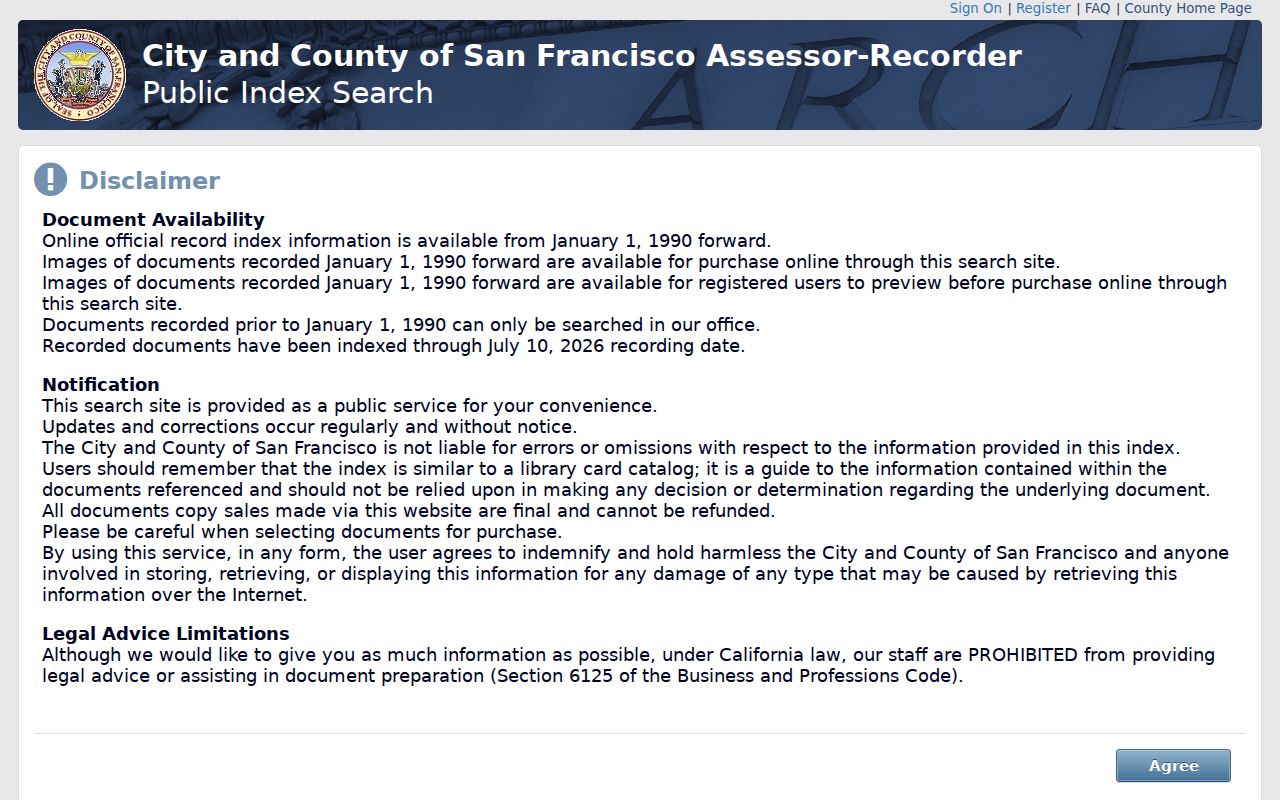
The portal's controls make a name, date, document, or parcel-based search possible without treating a street address as an accepted field.
San Francisco Block-Lot Search Path
A street address becomes more useful after it is translated into San Francisco's block-lot system. The Property Information Map accepts an address, a block-lot, a street intersection, or a map click. It can show the parcel number, official address, permit history, zoning, ZIP code, taxable values, build date, and map layers. Carry that block-lot into the assessor and recorder systems.
The Assessor-Recorder Community Portal searches real property by block alone, block and lot, or a structured address. A block-only search returns the lots within the block. A specific block-lot returns one parcel. Public guidance describes property details, characteristics, current assessed value, assessment history, exemptions, exclusions, property updates, and service-request status. It does not establish a public owner-name search, so do not assume one exists.
Visit the Assessor-Recorder Community Portal to see the live real-property entry point.
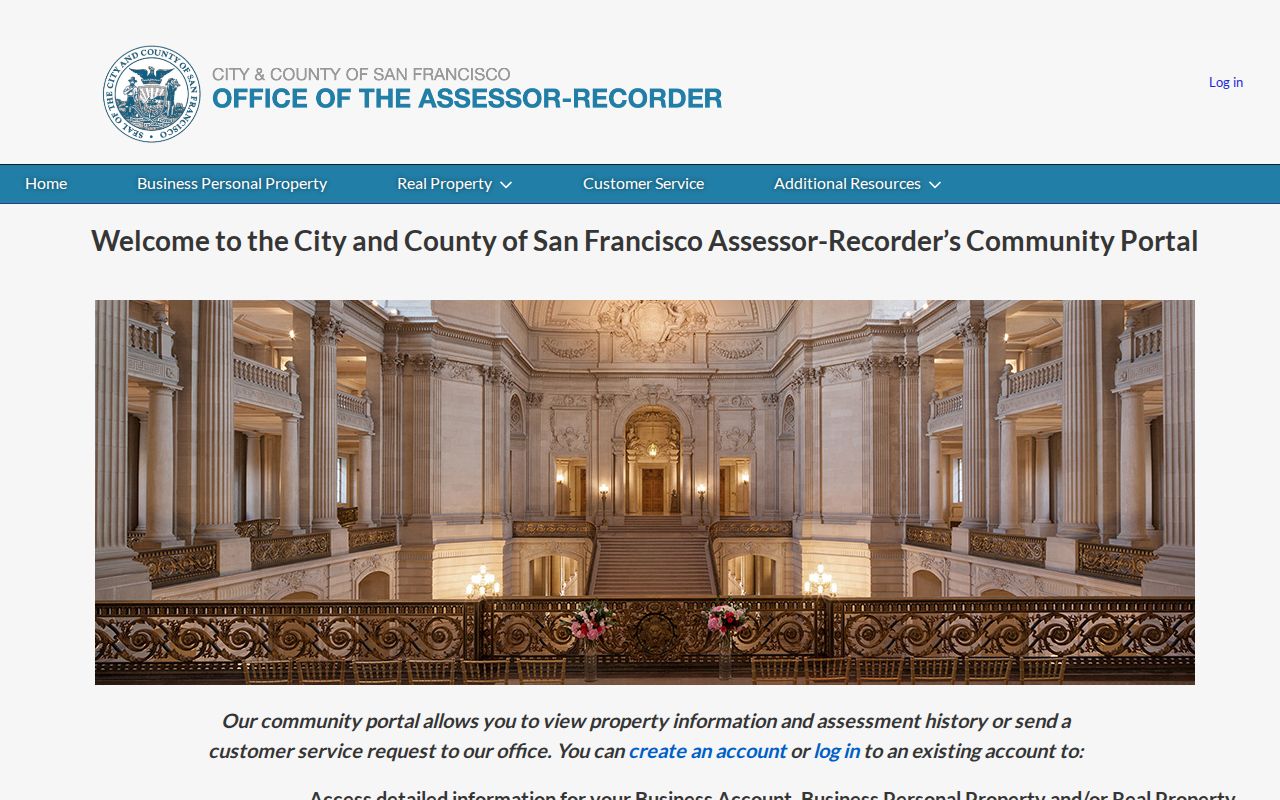
The parcel search is the bridge between a familiar street address and the APN expected by recorded-document tools.
Note: A situs address is the physical site, while a mailing address is the assessment contact address and may differ.
Trace San Francisco Court Records
The San Francisco Superior Court Case Information hub points to civil, family, probate, small claims, and criminal searches. Major civil case types filed from 1987 forward can be searched by case number or case name. Criminal tools include a case query and a cumulative index updated weekly. A docket is the court's running list of filings and events. It may identify parties, the case type, dates, and disposition even when document images are not online.
The web query uses a verification prompt to deter automated access. Public terminals and clerk departments remain important when the online index is incomplete, a case is older, or a copy is required. Juvenile matters, sealed files, adoption records, confidential victim information, and some family-law details are not open people-finding sources.
| San Francisco court source | Coverage | Search route | Fallback |
|---|---|---|---|
| Superior Court civil query | Listed civil, family, probate, and small claims cases from 1987 | Case number, name | Clerk department or public terminal |
| Superior Court criminal tools | Online query, weekly index, and a 120-day calendar window | Case, defendant, or attorney | Criminal Records Department |
| Northern District of California | Federal cases | PACER party and case search | Federal clerk or NARA for older files |
Review the Superior Court case-information choices before selecting a civil or criminal query.
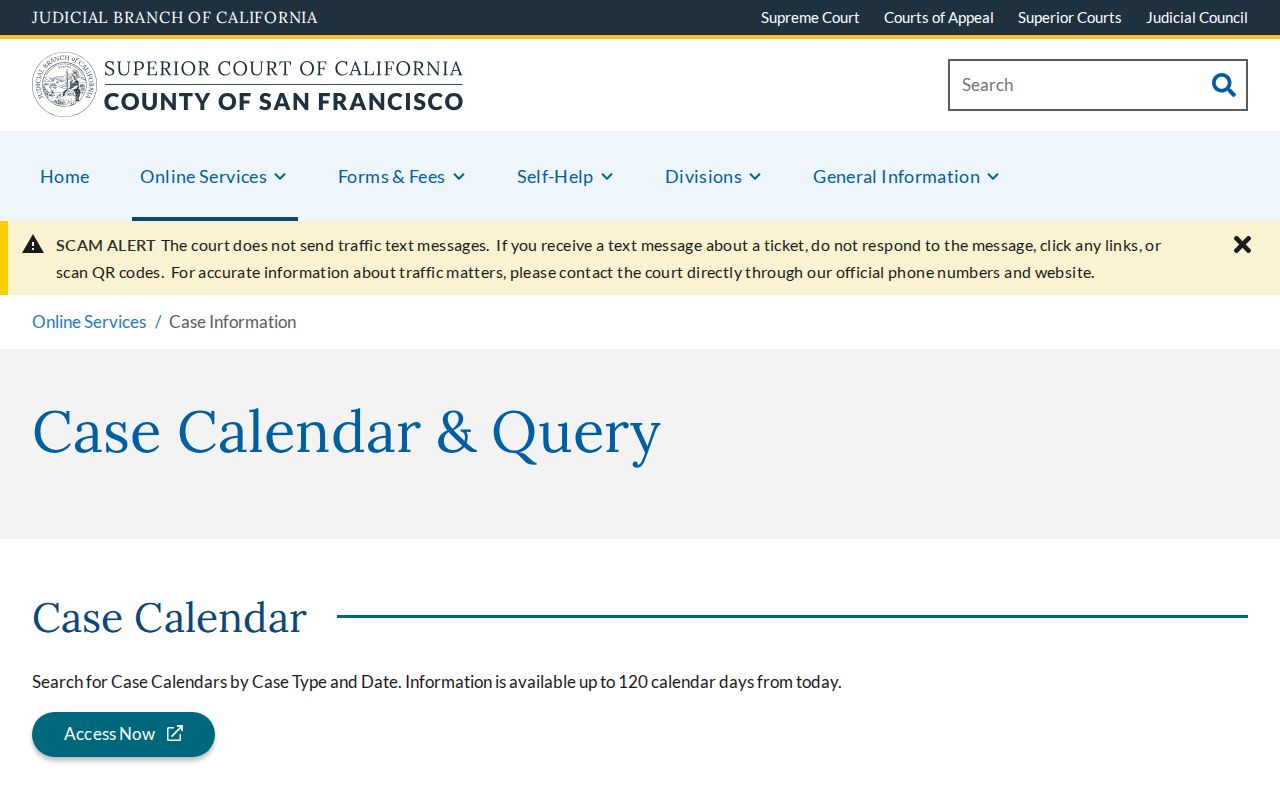
The official hub separates each case type and points readers to the correct online or clerk-based channel.
San Francisco Vital Records Search Limits
Vital records split among the San Francisco Office of Vital Records, County Clerk, Department of Public Health, California Department of Public Health, and Superior Court. DPH handles recent local birth and death events. The County Clerk supplies older local certificates and public marriage records. Divorce decrees are court files, not ordinary certificates from the health department.
California Health and Safety Code section 103526 distinguishes an authorized certified copy, which can establish identity, from a certified informational copy. Authorized mailed requests require a notarized sworn statement. Current San Francisco forms list $31 for a birth copy and $26 for a death copy. The birth form states that its fee is kept if the search finds no record and the office issues a Certificate of No Public Record. Confidential marriages and original birth certificates after adoption have stricter access rules.
- Certified copy
- An official copy issued by the custodian under the applicable eligibility rules.
- Informational copy
- A certified record marked as not valid to establish identity.
- Decedent
- The person named in a death record.
- Index
- A finding aid that points to a record but is not the record image itself.
Historical indexes, medical examiner ledgers, newspapers, and FamilySearch materials may support genealogy even when a modern certificate is restricted.
Search an Old San Francisco Address
San Francisco supports a deep address-to-person trail. Start with PIM for the block-lot and property context. Move to the Community Portal for assessment history and to Records Manager for modern transfers. For a year before online coverage, shift to the San Francisco Public Library. Polk's reverse street directories cover 1953 through 1982, while Haines reverse directories run from 1976 to current holdings. A reverse directory is arranged by address, not by surname.
Earlier owners may appear in Andrews Real Property Directory for 1943 and 1949, block books, or deed indexes. Great Registers can connect an adult voter to an address, age, party, and sometimes an occupation. City directories and phone books can identify occupants who were not owners. Newspapers then add obituaries, business notices, probate notices, and neighborhood events.
Address flow: street address → PIM block-lot → assessor facts → recorded deeds → reverse directory → newspapers or probate.
San Francisco Directory Search Beyond Portals
The Daniel E. Koshland San Francisco History Center is also the archives for the City and County. Its books, newspapers, maps, photographs, manuscripts, biography files, and civic records support searches that stop at a digital cutoff. SFPL holds city directories from 1850 through 1960 on microform and from 1875 through 1982 in print. Not every year survives, so researchers should check availability before visiting.
Phone books span 1899 to current holdings on microform and 1921 through 2006 in print. High school yearbooks reach back to the 1800s. Those yearbooks can help reconnect former classmates or identify a relative's school years. California Historical Newspapers supplies full text from 1847 through 2017 across several local titles. San Francisco people directories also include current education and government sources.
Open the San Francisco History Center collection page before reviewing the captured library view.
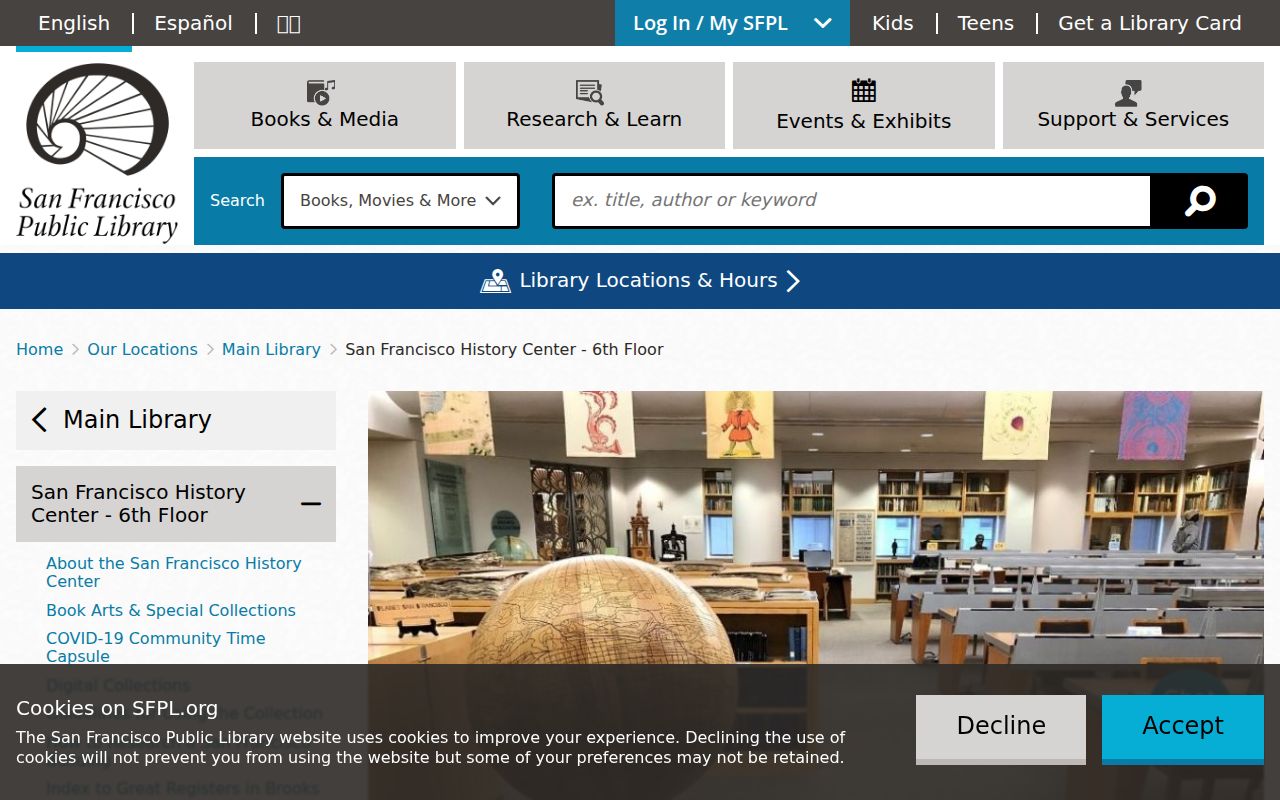
The library's archives role makes it a custodian of context as well as a place to consult old name lists.
Rebuilding a 1906 San Francisco Search
The 1906 earthquake and fire damaged official and private records, but it did not erase every trail. San Francisco has parallel sources from before and after the disaster. October 1906 block books, post-fire city directories, voter registers, newspapers, deed indexes, insurance material, and permit records can rebuild a person's link to a property or neighborhood.
The recorder timeline helps select the right shelf. The Real Property Index to Deeds covers 1848 through 1913 in an incomplete run. The Assessor-Recorder can find ownership and transfer records from 1914 forward. Records Manager brings the online portion from 1990 to the present. Missing years or volumes should be treated as a prompt to compare sources, not proof that an event never happened.
| Period | Strong San Francisco record path |
|---|---|
| 1848 to 1913 | Deed indexes, selected deed books, SFHC, and FamilySearch |
| 1914 to 1989 | Assessor-Recorder ownership records and City Hall search |
| 1990 to present | Records Manager online index plus official copy channels |
San Francisco Business Name Lookups
Business records can identify people who appear under a firm name rather than a home address. California's bizfile Online Business Search covers corporations, limited liability companies, limited partnerships, and public filings. Results may connect an entity to an agent for service, address, managers, officers, status, or Statements of Information, depending on the filing. The UCC search follows debtor names, secured parties, and file numbers.
San Francisco County Clerk fictitious business name filings cover local trade names. Professional trails then branch to California's consumer license search, the contractor license check, and the State Bar attorney search. Advanced license fields include first name, last name, license number, business name, and board or license filters. Confirm status and any discipline on the board's official record.
San Francisco Custody Record Search
The San Francisco Sheriff's jail locator searches current local custody by the first three letters of both first and last name, by booking number, or by SF number. The SF number is a permanent identifier within the county jail system. A custody match does not establish a court disposition. Use the Superior Court query for the public case trail and the Sheriff's records request channel for a releasable agency record.
California's CIRIS locator covers people currently in state custody. Its results can include name, CDCR number, age, current location, commitment counties, admission date, and parole-hearing dates or outcomes. VINE serves as a notification and custody-status system, not a full historical index. California's Megan's Law registry has its own statutory use warnings and should be consulted only for lawful safety purposes.
Voter Lookup Rules in San Francisco
The San Francisco Department of Elections Voter Portal and California My Voter Status are self-service tools for a voter to review personal registration details, party preference, election information, and ballot status. They are not browse-all name databases. California treats voter registration information as restricted data governed by Elections Code sections 2188, 2194, and 18109, related regulations, and Government Code section 7924.000.
Approved voter-file requests require a defined statutory purpose, an original signed application, identification, payment, and security promises. Confidential voters are excluded from ordinary release. Historical Great Registers are different: San Francisco library holdings can support legitimate historical and family research. The full current-versus-historical distinction is covered with San Francisco voter records.
Protected information. Voter data may not be used for harassment, marketing, unauthorized sharing, or an unsecured public posting. Misuse can be a misdemeanor.
Request Missing San Francisco Records
When no suitable index exists, identify the agency that created the record and describe the item with names, dates, case numbers, parcel numbers, or a narrow subject. California's Public Records Act requires agencies to make non-exempt public records available after a reasonably described request. San Francisco's Sunshine Ordinance adds local access procedures. A determination is generally due within 10 days, with a possible 14-day extension for unusual circumstances.
The San Francisco NextRequest portal accepts requests and lets users search prior requests. Some agencies, including the Sheriff, also maintain their own records channel. Ask to inspect records when practical, since inspection is often free. If an agency withholds material, request the exemption citation and consider whether narrowing the scope would reach a releasable record.
Open San Francisco NextRequest to review the city's submission and request-search interface.
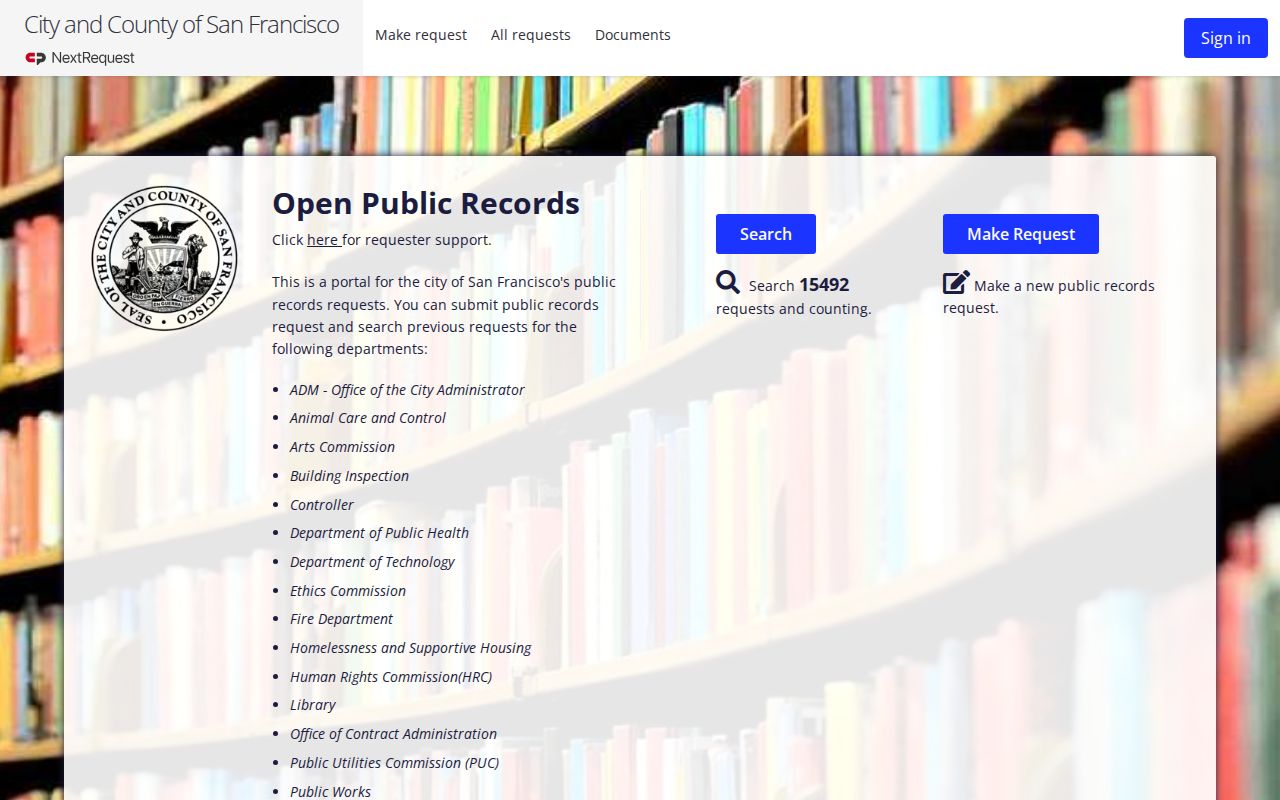
The request system fills a different role from a name index: it reaches agency records that may exist but are not published as searchable rows.
Check Official and Compiled Search Results
Official custodians and commercial compilations answer different questions. A county index can verify that a document was recorded, a case was filed, or a parcel carries a certain identifier. A compiled people-search report may combine public records, marketing data, directory entries, and user-provided material. That blend can be stale, incomplete, or tied to the wrong person.
| Source type | Useful for | Main limit |
|---|---|---|
| Official San Francisco index | Verifying a custodian's record entry | Usually covers one record system |
| Certified office copy | Proving the contents of a specific record | Fees and eligibility may apply |
| Historical directory | Placing a person at an address or in an occupation | Years and volumes may be incomplete |
| Commercial compilation | Generating a lead to verify elsewhere | Source, date, and identity match may be unclear |
Use the compilation as a lead only. Return to the recorder, court, library, state registry, or other named custodian before relying on a result.
Protect a San Francisco Search Subject
Public access still has firm privacy boundaries. California's Safe at Home program provides qualifying people with a substitute mailing address and helps public agencies avoid exposing a participant's changed name or location. Government Code sections 6205 through 6210 govern that address confidentiality program. Voter files omit confidential voters, and official records may redact Social Security numbers, signatures, victim information, juvenile data, and protected addresses.
California consumer privacy rights can support access, correction, deletion, and opt-out requests to covered businesses. Those rights do not erase an official public record held by a government custodian. Ask the office about a lawful redaction or confidentiality program when safety is at risk. For brokered listings, use the business's privacy process and keep the confirmation.
Use records with care. A public index is not permission to publish a person's sensitive data or contact someone who has asked to be left alone.